
This article was originally published on LinkedIn on 31 May 2024. It has been moved to the riskfacilitator Insights library so the website remains the permanent source.[1]
The Recent Incident on Singapore Airlines SQ321
Singapore Airlines SQ321 recently experienced severe turbulence, causing the aircraft to drop approximately 178 feet in just 4.6 seconds. This sudden and violent motion resulted in one fatality and injuries to dozens of passengers. Many of these injuries occurred because passengers were thrown from their seats and hit the cabin ceiling or other hard surfaces.
This incident underscores the critical importance of passenger safety measures on aeroplanes, particularly the use of seatbelts. However, could the integration of airbags in aeroplanes have mitigated the severity of these injuries?
The Benefits of Airbags on Aeroplanes
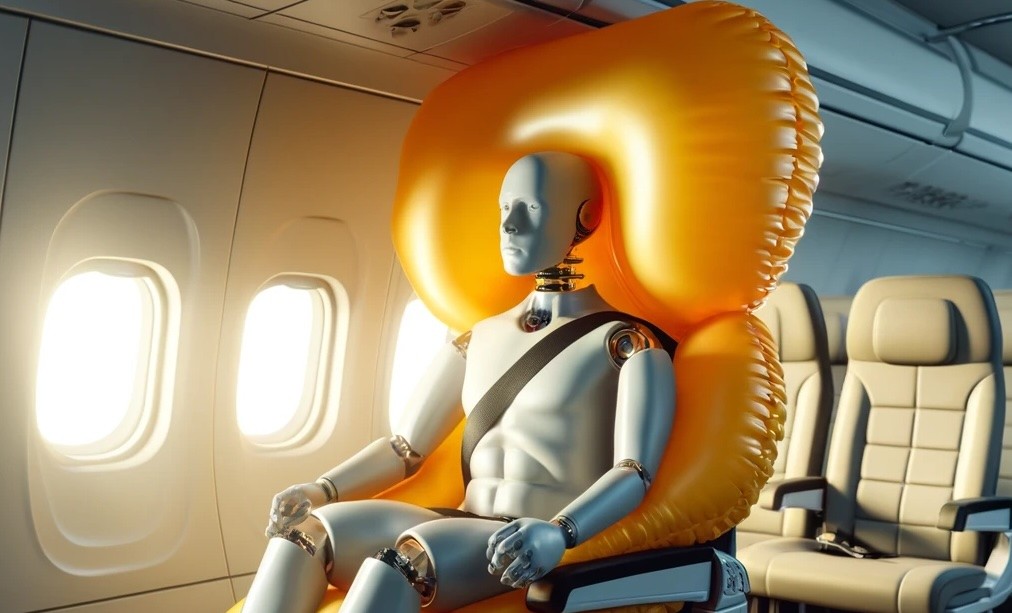
Airbags, specifically designed for use in aeroplane seats, offer several significant benefits:
Enhanced Impact Protection
Airbags can significantly reduce the risk of impact injuries during sudden deceleration or hard landings by providing a cushion that absorbs and disperses the force of impact.
Limits During Turbulence
Inflatable restraint systems are designed primarily to reduce impact injury in crash or emergency-landing conditions. They do not replace the protection provided by a correctly fastened seatbelt during unexpected turbulence.
Universal Passenger Protection
Airbags provide protection for passengers of all sizes, including children, the elderly, and individuals with disabilities, who may be more vulnerable to injury during an emergency.
Could Airbags Have Prevented Injuries on SQ321?
The SQ321 event demonstrates why passengers should keep their seatbelts fastened whenever seated. The available evidence does not establish that inflatable restraints would have prevented the injuries sustained by unbelted passengers during this in-flight upset.
Industry Adoption and Future Outlook
Inflatable restraint systems have been incorporated into some aircraft seating configurations to provide additional occupant protection during crash conditions.
Regulatory and Industry Support
Regulatory bodies such as the Federal Aviation Administration and the EASA - European Union Aviation Safety Agency support the use of airbag systems in aircraft as part of their broader safety enhancement initiatives. The growing industry adoption of airbag systems reflects a commitment to improving passenger safety and reducing injury-related costs and liabilities.
A New Horizon for In-Flight Safety
The SQ321 incident highlights the importance of keeping seatbelts fastened whenever seated. Inflatable restraints may offer additional protection in the crash conditions for which they are designed and certified, but they are not a demonstrated substitute for seatbelt use during turbulence.
Share Your Thoughts
What do you think about the use of airbags on aeroplanes? Do you believe they could significantly improve passenger safety? Or should we focus on mandating seatbelt use at all times while seated?
References
- Paul Chivers, From Cars to Planes: Are Airbags the Next Big Thing in Air Travel Safety?, LinkedIn, originally published 31 May 2024.
- Singapore Transport Safety Investigation Bureau, preliminary findings for SQ321, accessed 10 August 2026.
- United States Federal Aviation Administration, Passenger safety tips, accessed 10 August 2026.
- United States Federal Aviation Administration, Inflatable restraint systems, accessed 10 August 2026.