
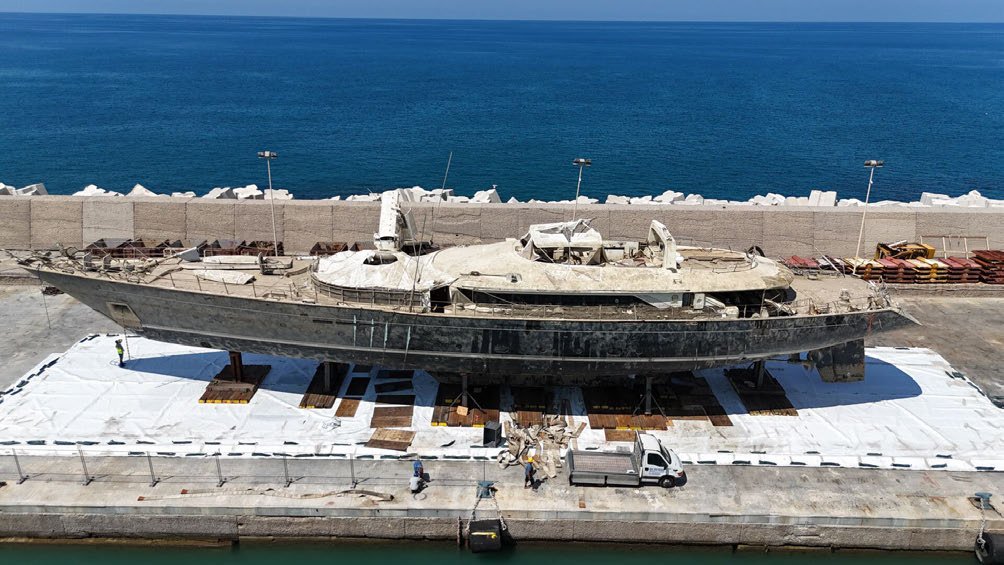
The detail that stayed with me in the Bayesian investigation was the position of the centreboard.
The crew usually kept it raised at anchor. With the centreboard lowered, the yacht was more prone to swinging from side to side, increasing the chance of dragging its anchor. Raising it helped the crew manage a problem they understood. It also made the yacht more vulnerable to being knocked onto its side in extreme winds.
That vulnerability had never been assessed with the sails down. The crew had no basis to weigh it against the risk they were managing.
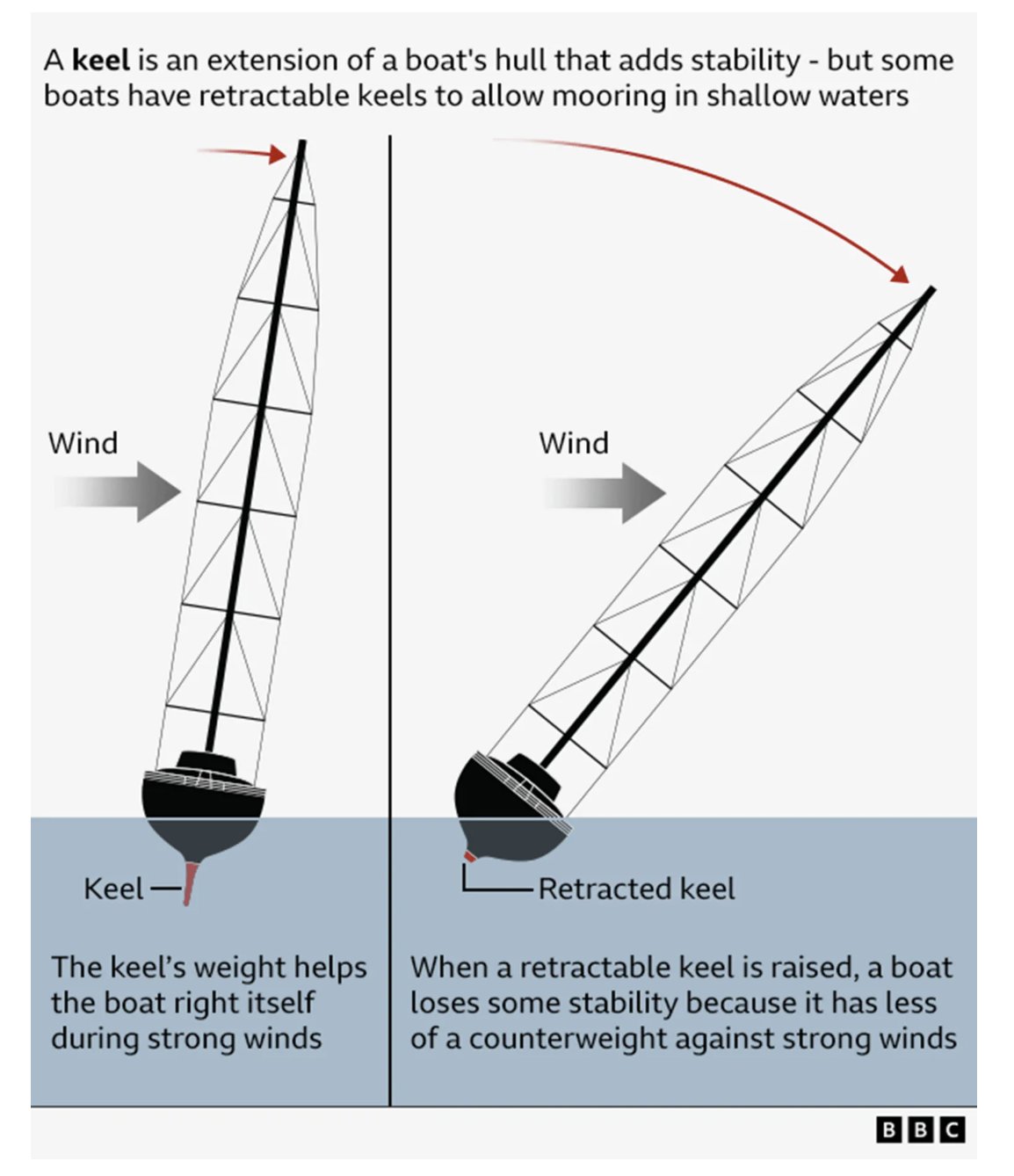
On 19 August 2024, Bayesian was anchored off Porticello, Sicily. In about 14 minutes, calm conditions gave way to winds of at least 68 knots. The yacht went onto its side in less than 15 seconds, beyond the point at which it could right itself. It sank about 18 minutes later. Seven people died. Fifteen survived.
What made sense at the time
When I look at an operational decision after an incident, I want to understand what made it sensible to the people doing the work. In this case, keeping the centreboard raised was a response to how the yacht behaved at anchor. The crew had experience of that behaviour. They had no equivalent information about the yacht’s stability in extreme winds with the sails down.
Thunderstorms were forecast, but the forecast gave the crew little indication of how severe the winds could be. The approved stability booklet offered general advice about securing openings, with little guidance on when to act at anchor. The yacht code did not require the stability assessment that would have revealed the vulnerability in this configuration.
Put yourself on watch that night. You have a forecast for thunderstorms and a yacht whose behaviour at anchor you know from experience. What would tell you that the conditions now called for a different decision? How much time would you have to act on it?
What still worked after the knockdown
None of the liferafts deployed automatically during the sinking. A crew member launched one manually. Crew helped guests clear the yacht, provided first aid and searched for others. A nearby vessel’s crew saw the distress flares and sent a tender to recover the survivors.
The investigation found that the forward starboard liferaft was still in its cradle after salvage, even though its release unit had operated as designed. A release unit can work and the raft can still remain trapped. The outcome you need to verify is whether the raft can get clear of the vessel, including when the vessel is on its side.
What I’d ask in an assurance review
Whether I’m reviewing a marine operation, an event or a production, I’d ask the people doing the work to walk me through a routine decision they make when conditions start to change.
- What problem does that decision solve, and what other risk might it change?
- What would tell you it’s time to do something different, and how much time would you have to act?
- If the situation gets beyond your control, which recovery measures can you still reach and use?
Then I’d follow those answers back through the system.
- Who tested the equipment in the configuration people actually use?
- Who translated the results into guidance they could act on?
- Has anyone checked whether the warning would arrive early enough for the action it calls for?
Being at anchor with the sails down was routine for Bayesian. That’s where I’d start looking in any operation. Pick a decision people make every day, understand why it works, and check whether the conditions that could make it unsafe are covered by the assessment.
Look at what changes between operating conditions
For me, the centreboard decision exposes a gap that can sit inside an otherwise familiar operation. A choice can solve the problem people encounter regularly while changing their exposure to a less visible hazard. Repeating that choice successfully does not tell us how it will perform when the conditions change.
The MAIB found that the mast and furled sails still contributed significantly to the wind forces acting on Bayesian. Taking the sails down did not remove that exposure. The assessment and guidance needed to address the configuration the crew actually used at anchor.
I would apply that question to other work: what changes when an event moves from build to public access, when a production pauses overnight, or when equipment is parked rather than operating? Who checks the assumptions at those transitions? A control that works during one phase may need a different arrangement in another.
A trigger needs enough time behind it
The report says it took approximately two minutes and thirty seconds to lower Bayesian’s centreboard using both hydraulic pumps. The final movement from an estimated 10–20 degrees of heel to lying on its side took less than fifteen seconds. Those figures do not establish that lowering the centreboard would have prevented the loss. They show why the timing of a decision matters as much as the action itself.
When I review a weather plan, I want to work backwards from the action.
- How long does it take to recognise the warning, contact the decision-maker, stop the work and complete the protective measures?
- What happens if someone is unavailable, visibility is poor or several things need doing at once?
A trigger set at the point where conditions become dangerous may leave too little time.
The plan needs an earlier decision point, a clear person authorised to act and a margin for delay.
Where forecasts cannot reliably provide that lead time, I would ask what precautions need to be in place before the uncertainty arrives.
Test the whole recovery sequence
The liferaft finding is particularly useful for assurance. The MAIB found that the hydrostatic release units had operated, but the stowage arrangements held the buoyant liferafts in place. Later yacht-code requirements considered floating free with the vessel upright. The emergency had changed that condition.
That makes me cautious about accepting a service certificate or a successful component test as the whole answer. I want to follow the sequence through: can the equipment release, move clear, deploy and be reached by the people who need it?
The same questions apply to an evacuation route that may be blocked by the incident, a rescue system that depends on the power supply it is meant to protect against losing, or emergency communications in the area where coverage is weakest. These are examples I would test in a review, rather than findings about Bayesian.
Turn the learning into something you can verify
The report also recognises the crew’s training, experience and initiative in helping those who escaped to survive. Their emergency arrangements had not anticipated an event that moved so quickly that the usual muster and evacuation sequence was bypassed.
I would use that finding to shape a practical exercise: remove one assumption the plan depends on and ask the team to explain what remains possible. Then record the gaps, assign responsibility for resolving them and check the revised arrangement in use.
The useful outcome of a review is a clearer decision, a workable action and evidence that the people and equipment can carry it through. For Bayesian, the investigation reveals how much depended on information the crew did not have. In our own operations, we can start by asking where we may be expecting people to manage a risk the system has never made visible to them.
Read the full investigation
MAIB Report 22/2026 — Bayesian, including annexes (published 19 November 2026).