
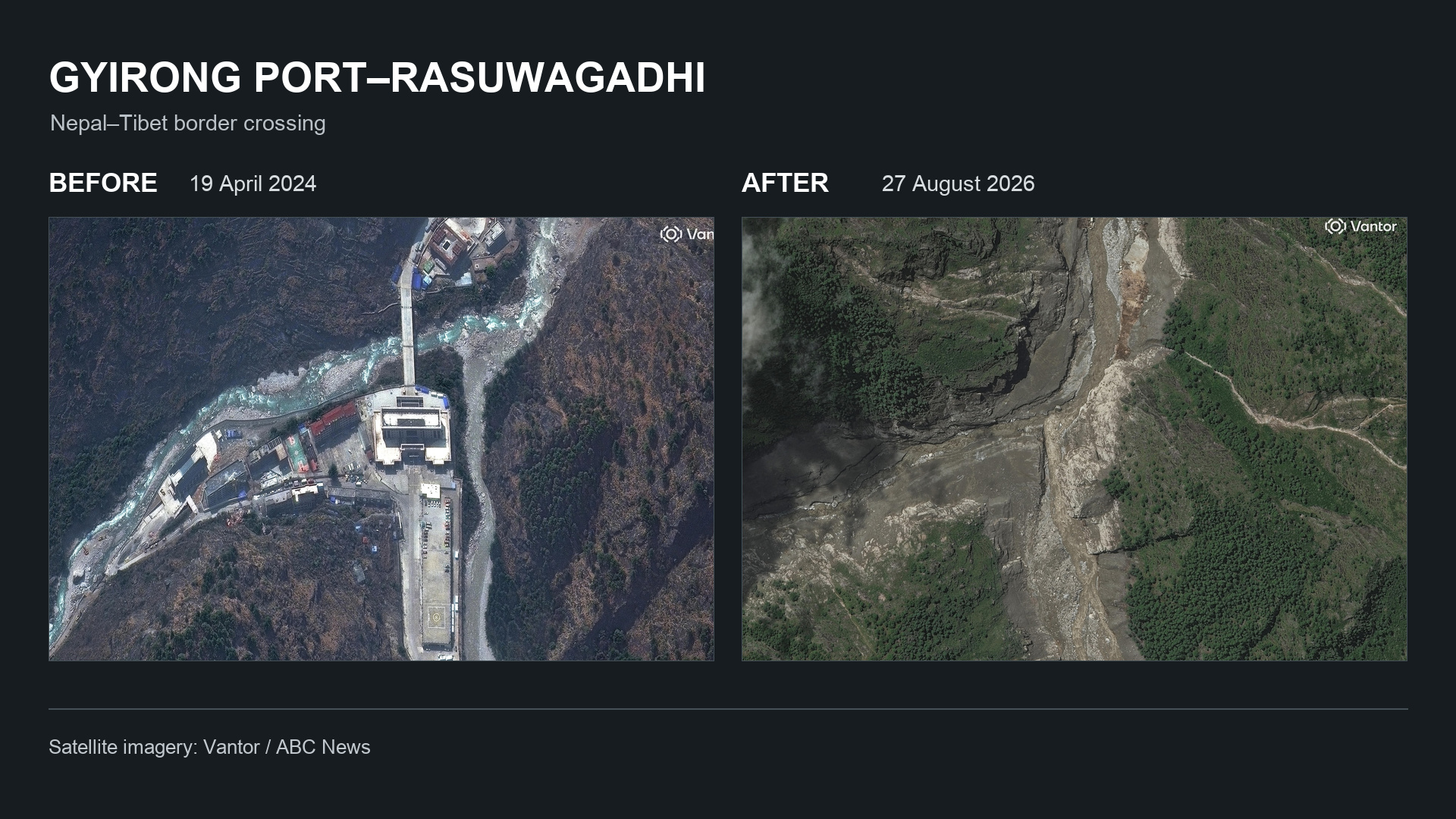
When a major disaster occurs, it rarely takes long before the questions begin. Why wasn't the risk identified? Why weren't the warnings acted upon? Why didn't somebody intervene? Sometimes those questions expose genuine failures in governance, preparedness or control. But they also contain a trap that anyone involved in risk, safety, investigation or organisational decision-making should understand. We know what happened. The people making decisions before the event did not.
That difference sounds obvious, yet it fundamentally changes how we interpret everything that came before the outcome. Information that may have been uncertain, incomplete or unremarkable at the time can suddenly appear significant. Previous events become precursors. Anomalies become warning signs. Decisions that appeared reasonable within the circumstances can look inexplicable when viewed through the lens of what eventually occurred.
This is hindsight bias, and it may be one of the most influential and least acknowledged biases in how organisations investigate and learn from failure.
Nepal and the warning signs we can now see
The catastrophic 2026 flooding in Nepal provides a confronting contemporary example. In the aftermath of the disaster, attention quickly turned to what could have been known beforehand. Satellite imagery and monitoring information were examined, questions were raised about glacier instability and information sharing, and scrutiny turned to the adequacy of monitoring and early-warning arrangements.

Viewed after the disaster, pieces of information that existed beforehand can begin to form a coherent story. There was an unstable environment. There were observable changes. The Himalayan region has known glacial hazards. Monitoring capability existed. Warning arrangements could have been stronger. A catastrophic event then occurred. Placed in that sequence, the pathway can appear remarkably clear. But that is not how risk presents itself in real time.
The people responsible for monitoring these environments did not have an image labelled "the glacier that will collapse tomorrow". They were operating within an enormous, dynamic mountain system containing countless changes, anomalies and potential hazards, most of which would not result in catastrophe. They had to determine which signals mattered, how reliable those signals were, what they might mean, whether intervention was justified and what action was practically available.
This does not mean the system was adequate. There may be significant lessons about monitoring, information sharing, warning systems, emergency preparedness and community resilience. Those matters should be examined rigorously. The problem arises when evidence of opportunities for improvement becomes evidence that the eventual outcome must therefore have been obvious. Those are not the same thing.
What did the information mean before we knew the answer?
Imagine being shown the satellite imagery from Nepal the day before the collapse, without being told what happened next. You are responsible for assessing risk across a vast mountainous region and you observe movement or instability. What threshold would cause you to evacuate communities, close roads, suspend infrastructure or trigger emergency arrangements?
Now add the operational context. How frequently are similar movements observed? How often do they result in catastrophic failure? What confidence exists in the monitoring data? What other locations are also demanding attention? What are the consequences of repeatedly evacuating communities when predicted events do not occur? What authority exists to intervene and how quickly could an evacuation realistically be undertaken?
These questions do not diminish responsibility. They allow us to examine responsibility properly because they reconstruct the decision environment rather than simply judging the decision against the eventual outcome. The distinction is important. Risk decisions are made looking forward into uncertainty. Investigations are conducted looking backwards from certainty.
 ▶ Watch the CCTV footage on Euronews ↗
The warning signs were there
"The warning signs were there" is one of the most common observations made after a serious event, and sometimes it is entirely correct. Organisations do ignore information. Concerns are sometimes raised and not acted upon. Controls deteriorate. Commercial or operational pressures can influence decisions. Leaders can become disconnected from what is actually happening.
But identifying information that existed before an event is only the beginning of the inquiry. The more important question is what that information meant to the people receiving it at the time.
A maintenance report might look like an obvious precursor after a machine fails catastrophically. Before the failure, it may have been one of hundreds of maintenance issues being managed across a facility. A worker's concern may look prophetic after an incident, while at the time it competed with other reports and operational information. A weather forecast may appear to have clearly predicted dangerous conditions once an event has been cancelled or somebody has been injured, despite considerable uncertainty when the decision to proceed was actually made.
The outcome gives information meaning that it may not have possessed beforehand. That is precisely why hindsight bias is so difficult to recognise. Once we know which information mattered, it becomes extraordinarily difficult to imagine not knowing.
We create the same distortion in workplace investigations
Consider what happens following a serious workplace incident. An investigation team may spend weeks or months assembling information. Investigators review CCTV footage, interview witnesses, examine procedures, retrieve maintenance records, reconstruct timelines, engage experts, review training records, examine emails and analyse previous events. Eventually, they may have access to vastly more information than any individual involved in the work had at the moment the event occurred.
From that position, it can become tempting to ask why the worker, supervisor or manager did not recognise what now appears obvious. But compare the two information environments.
The worker may have had seconds or minutes to interpret what was occurring while simultaneously performing the work. Their attention was divided between multiple demands. They did not know an incident was about to happen, and their previous experience may have reinforced that the way the work was being performed was successful.
The investigator has something completely different. They know the outcome. They know where to look. They can replay events. They can isolate the information that mattered and disregard information that did not. They have the benefit of expert analysis and, importantly, time.
If we fail to recognise that difference, investigations can become exercises in explaining why people failed to see what investigators can now see. That produces very little useful learning.
Yesterday the same work was successful
There is another aspect of hindsight that deserves attention. Many of the conditions subsequently identified as contributing to an incident were present when the work was previously successful.
The procedure may have been routinely adapted because it did not reflect operational reality. Equipment may have operated with known limitations. Supervisors may have accepted certain practices because those practices had repeatedly enabled work to be completed. Workers may have developed informal ways of managing variability that allowed the system to function despite deficiencies elsewhere.
Yesterday, those adaptations helped produce success. Today, after an adverse outcome, the same adaptations can suddenly be described as shortcuts, violations, complacency or poor judgement. The behaviour has not necessarily changed. The outcome has.
This is why understanding work as actually performed is so important. People continually adapt to changing conditions, competing priorities, resource limitations and imperfect systems. Most of the time those adaptations are precisely what allow organisations to function successfully. If we only study them when something goes wrong, we risk confusing the normal variability of work with the cause of failure.
Good decisions can still have bad outcomes
Hindsight bias is not limited to frontline work or incident investigation. It is equally relevant to boards, executives and officers. Senior leaders routinely make decisions where there is no perfect answer. They decide whether to proceed with an event, enter a market, approve an investment, accept a technical recommendation, suspend operations, allocate resources or tolerate a particular level of uncertainty. Those decisions are rarely made with complete information.
If the outcome is positive, the decision may later be regarded as commercially astute, pragmatic or courageous. If the same decision results in a serious adverse outcome, it can quickly be reframed as reckless, negligent or obviously flawed.
The outcome alone cannot tell us whether the decision was good. A well-considered decision can produce a poor outcome because uncertainty cannot be eliminated. Equally, a poorly considered decision can produce a good outcome because the organisation was fortunate.
Effective governance therefore requires us to examine the quality of the decision process, not simply the result. What information was reasonably available? What uncertainty was understood? What assumptions were being made? What controls were relied upon? What assurance existed that those controls were effective? What alternatives were considered? What would have caused the decision to change? Those questions tell us considerably more about risk management than simply asking whether the outcome was good or bad.
Hindsight should help us improve the system, not rewrite the past
None of this is an argument against accountability or rigorous investigation. Quite the opposite. Understanding hindsight bias makes investigation more demanding because it requires us to reconstruct the conditions surrounding decisions rather than settling for explanations that only make sense after the event.
There may well have been opportunities to prevent the Nepal disaster or reduce its consequences. Better monitoring may have helped. Better information sharing may have helped. More effective early-warning arrangements, emergency planning or infrastructure resilience may have changed the outcome. Those possibilities deserve serious examination. But learning requires us to distinguish between what we know now and what people could reasonably have known then. That distinction changes the questions we ask.
Rather than asking why somebody ignored a warning, we should first understand whether it was actually perceived as a warning. Rather than asking why a worker made the wrong decision, we should understand why that decision made sense within the conditions they were facing. Rather than asking why management failed to intervene, we should examine what information reached them, how that information was interpreted and what organisational mechanisms existed to trigger intervention. This is not softer accountability. It is better inquiry.
A simple test for hindsight
The next time somebody says, "The warning signs were obvious", there is a simple question worth asking: would they have been obvious if nothing had happened?
If the answer changes once we remove knowledge of the outcome, we may be looking at the past through the lens of hindsight rather than through the reality experienced by the people who were there.
Risk management does not happen after the event when all the evidence has been assembled and the uncertainty removed. It happens before the event, when information is incomplete, signals compete for attention, operational pressures are real and people must make decisions without knowing what happens next.
The purpose of learning should not be to demonstrate how easily yesterday's outcome could have been predicted. It should be to understand how the system actually operated, why decisions made sense at the time, what information was available, how people adapted and where we can strengthen the capacity of the system to recognise and respond to similar conditions in the future.
Because once we know how the story ends, the beginning will always look different.
Originally published on LinkedIn, 11 September 2026. Cover satellite imagery: Vantor / ABC News.