This article was originally published on LinkedIn on 26 January 2026. It has been moved to the riskfacilitator Insights library so the website remains the permanent source.[1]
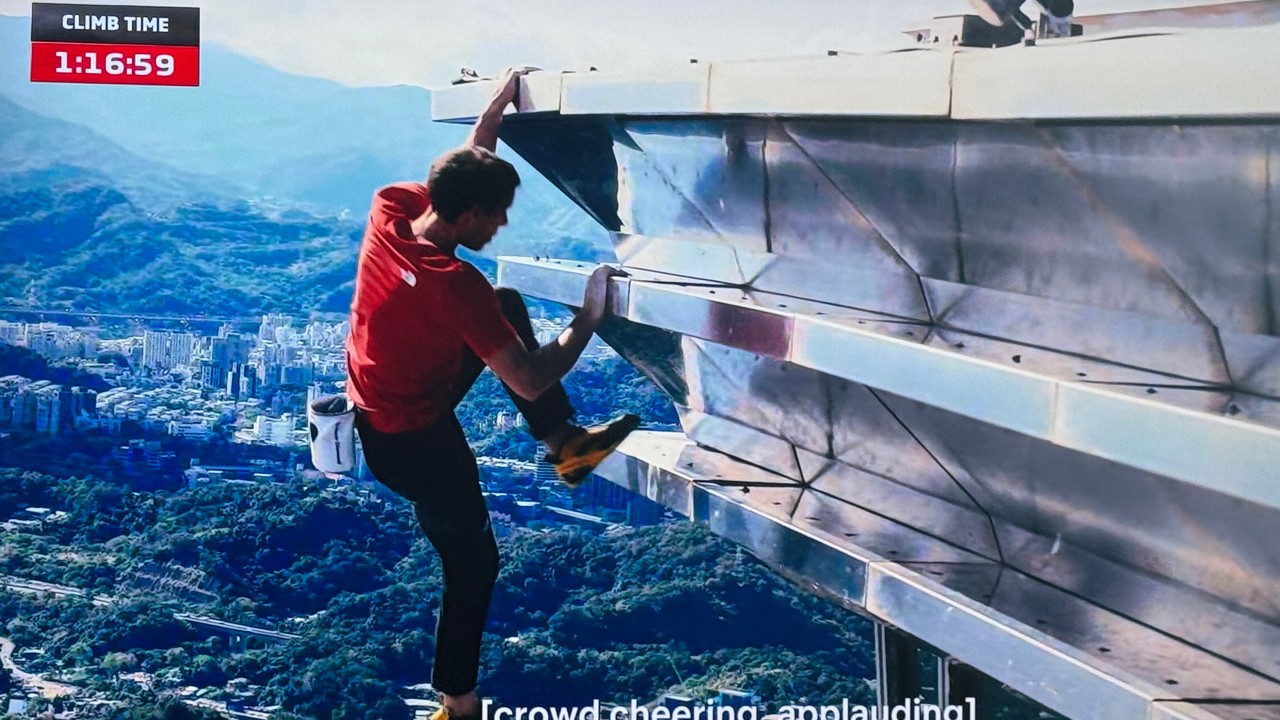
I watched Alex Honnold climb Taipei 101 live on @Netflix and felt both inspired and uneasy.
Inspired by the level of preparation, discipline, and capability on display. This wasn’t recklessness. It was intentional exposure, deep competence, and someone who understands risk in ways most people never will. In many respects, it reflects what modern risk management should be about, not eliminating risk, but engaging with it honestly and proportionately.
But as the broadcast unfolded, and as more context emerged around how deliberately this was designed as a live production, something shifted.
This wasn’t simply a human achievement being observed. It required rare permissions, commercial partnerships, and was framed as a pass or fail challenge with global audiences watching in real time. Even Honnold acknowledged that without turning it into a show, the climb likely wouldn’t have been possible.
At that point, the risk stopped being purely personal.
It became systemic. From a systems of safety perspective, this matters.
Humans are never mistake-free. Even elite performers experience fatigue, distraction, variability, and shifting psychological states. Skill reduces the likelihood of failure, but it never removes the consequence. When a system depends on flawless human performance and the failure mode is catastrophic, it is inherently fragile.
The building itself adds another layer. Skyscrapers are not designed as life-critical climbing systems. Surface conditions, fatigue accumulation, weather, coatings, and structural variability introduce uncertainty that cannot be fully engineered out. Yet in this system there was no redundancy, no buffer, and no recovery layer.
Coming from a climbing background, and having spent years pulling together some of the world’s most complex rigs and high-risk challenges for television, this tension is very familiar. High-risk activity isn’t the issue, it’s how the system is built around the human.
In every major production environment I’ve worked in, the goal has never been to remove challenge or drama. It’s been to layer controls so that when human variability shows up, the consequence isn’t catastrophic. Redundancy, recovery systems, abort points, engineering controls, medical response and clear decision thresholds are what allow extreme experiences to exist without relying on perfection.
In most television environments, we showcase the perception of risk while quietly engineering safety underneath it. What made this live event fundamentally different is that those layers were intentionally removed.
The perception of risk and the actual consequence finally aligned. Perfection became the control. The climb itself represents the edge of human capability.
The broadcast represents a system deliberately designed around single-point catastrophic failure. And that’s where my curiosity now sits.
What I would genuinely love to see is Netflix’s due diligence behind this broadcast Ruth Denyer , not out of criticism, but out of curiosity. The risk assessments, the executive sign-offs, the human factors analysis, the welfare planning. It would be one of the most fascinating modern case studies in how organisations grapple with catastrophic single-point-failure systems.
Not because someone necessarily got it wrong. But because it sits at the frontier of modern risk governance. Where personal autonomy meets organisational responsibility.
Where achievement meets fragility. And where due diligence is tested in its most uncomfortable form.
#AlexHonnold #Taipei101 #Netflix #SkyscraperLive #LiveBroadcast #DueDiligence #SystemsOfSafety #RiskLeadership #ProductionSafety #MediaEthics #risky
https://www.netflix.com/au/title/81987107?s=i&trkid=264265097&vlang=en&trg=cp[2]
References
- Paul Chivers, When personal risk becomes a live event, what does due diligence really look like?, LinkedIn, originally published 26 January 2026.
- https://www.netflix.com/au/title/81987107?s=i&trkid=264265097&vlang=en&trg=cp, source linked in the original article, accessed 10 August 2026.