
This article was originally published on LinkedIn on 13 June 2025. It has been moved to the riskfacilitator Insights library so the website remains the permanent source.[1]
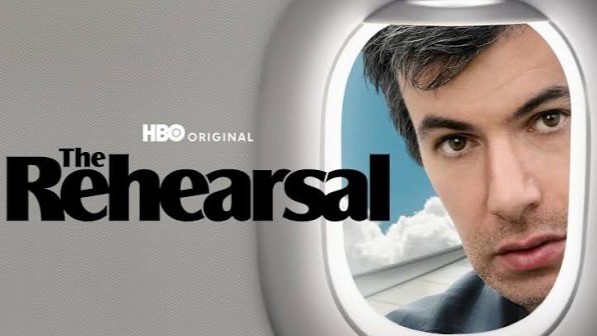
In HBO ’s The Rehearsal, comedian and creator Nathan Fielder allows ordinary people to prepare for life’s biggest moments by “rehearsing” them in carefully crafted simulations. Entire buildings are reconstructed. Actors mimic friends and family. Scenarios are repeated until every possible reaction feels accounted for.
But things still go wrong.
In Season 2, we see people hesitate to speak up, defer to authority, and suppress discomfort, all because they feel bound by the structure of the simulation. Scripts replace instinct. Roles override judgment. People perform rather than act.
It’s more than a show, it’s an unintentional masterclass in human factors. And it raises a difficult question: Is CRM failing our pilots in the same way?
Crew Resource Management (CRM) is a cornerstone of aviation safety. It’s meant to ensure that flight crew work as a team, monitoring each other, challenging when necessary, and responding effectively under pressure. But when CRM breaks down, silence replaces challenge, and assumptions replace verification.
On 12 June 2025, Air India Flight 171 crashed shortly after takeoff from Ahmedabad. There was one survivor. The official investigation remains ongoing, and no final cause has been determined.
This article is not an investigation. It considers the human dynamics that can challenge aviation safety systems, without attributing those dynamics to Flight AI171.
Simulated Safety vs. Real Risk
CRM is drilled into crews through full-motion simulators, checklists, and roleplay. Like in The Rehearsal, the performance is often perfect in simulation.
But the real world introduces ambiguity:
- You’re fatigued.
- You’re unsure if a checklist was actually completed.
- You think you saw the flap lever, but didn’t verify.
- You notice something… but the captain seems confident.
Just like the participants in The Rehearsal, flight crew can default to role expectations, status hierarchies, or silence.
And that’s when CRM becomes a theatre piece, performed but not practiced.
Rehearsal Doesn't Equal Readiness
The core problem may not be human error, but how we design systems that assume human perfection.
Are we:
- Training assertiveness under real pressure?
- Simulating confusion or only clarity?
- Designing for dynamic situations or static compliance?
The broader question is not about attributing this tragedy to a CRM breakdown. It is whether training and simulation adequately prepare people to challenge, verify and act when real conditions depart from the script.
In The Rehearsal, people are given endless takes. They can start over, rework the moment, rehearse it again.
In aviation, there are no retakes.
If we want safety systems to succeed, we must prepare for how people really behave, not how we hope they will.
Simulation is not the end. It’s the start of the conversation.
References
- Paul Chivers, Could HBO’s The Rehearsal Have Pre-emptively Uncovered What Went Wrong with Flight 171?, LinkedIn, originally published 13 June 2025.
- Aircraft Accident Investigation Bureau, India, Air India Flight AI171 preliminary report and interim statement, accessed 10 August 2026.
- UK Air Accidents Investigation Branch, update on the preliminary report into Air India Flight AI171, accessed 10 August 2026.