
This article was originally published on LinkedIn on 23 November 2025. It has been moved to the riskfacilitator Insights library so the website remains the permanent source.[1]
Primary sources used to verify and contextualise this archive: [2]
Most organisations do not fail because they lack safety systems. They fail because they have too many of them and they stop making sense.
Over time, safety systems tend to grow. A form is added after an incident. A checklist appears after an audit. A new procedure is written after a near miss. Slowly, layer by layer, the system becomes heavier.
This is known as safety clutter.
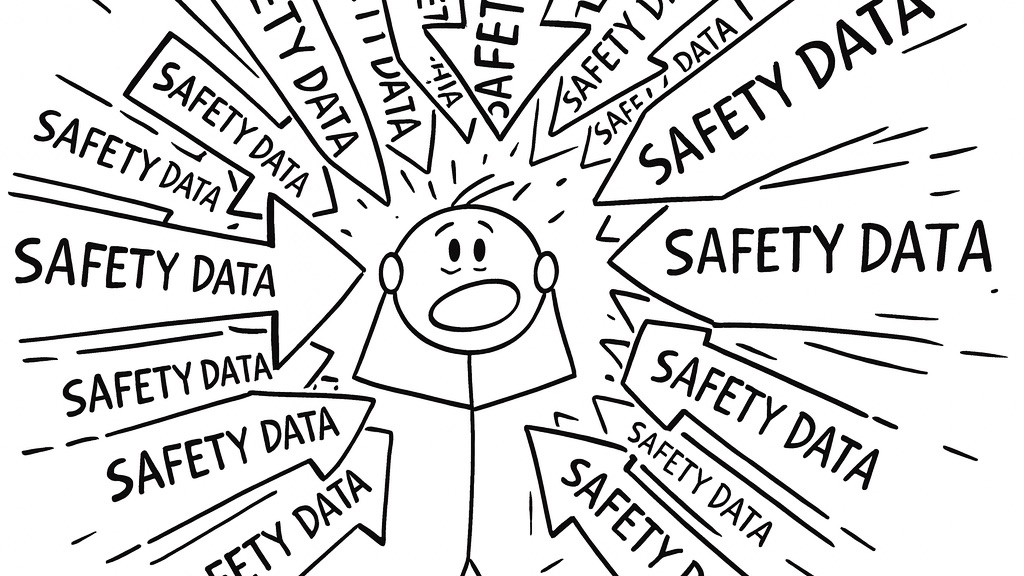
Safety clutter is the accumulation of safety procedures, documents, roles and activities performed in the name of safety that do not contribute to the safety of operational work. The term itself is not new, but the scale of the problem is.
In many organisations today, the volume of “safety work” now exceeds the volume of productive work. Entire teams exist to manage the artefacts of safety rather than the conditions of work.
On paper, this looks like maturity. In practice, it creates fragility.
When Doing Safety Replaces Being Safe
The uncomfortable reality is that we have normalised bureaucratic safety. We reward production of documentation, not quality of decision-making. We audit completeness, not effectiveness. We measure activity, not learning.
This creates a dangerous inversion.
Instead of systems supporting work, work becomes distorted to support systems.
Workers learn what matters by what is checked. When paperwork becomes the primary signal, real risk is pushed to the margins. This is not defiance. It is adaptation. Humans are remarkably good at navigating poorly designed systems.
The result is a predictable pattern:
- Procedures become longer to cover more scenarios.
- Forms multiply to satisfy assurance. Inductions grow to demonstrate diligence.
- Checklists expand to ensure coverage. But the signal-to-noise ratio collapses.
- Critical hazards are hidden inside administrative clutter.
- Real controls are diluted by low-value controls.
- Time that could be spent understanding risk is spent feeding systems.
The Cognitive Cost of Clutter
Safety clutter does not only waste time. It consumes attention.
Humans have finite cognitive capacity. When overloaded, they do not become more careful. They become selective. They skim. They assume. They default. They work from memory rather than procedure.
This is not laziness. It is normal neurological adaptation.
When systems become impossible to follow in full, workers invent their own unofficial systems. Work as imagined diverges from work as done. The gap widens, quietly and slowly, until failure appears “sudden” to those outside the work.
Why This Problem Keeps Growing
Safety clutter is rarely created deliberately. It grows through good intentions.
Each new control is added to show care, diligence, responsiveness. But very few organisations ever remove controls. Very few ever ask, “What no longer helps?”
This is compounded by:
- Legal anxiety. Regulator expectations. Client demands. Insurance pressure. Reputation risk.
- The easiest thing to do is to add. The hardest thing to do is to subtract.
- Yet subtraction is where performance lives.
From Safety-I to Safety-II Thinking
Contemporary safety science has been telling us this for more than a decade.
Traditional safety thinking focuses on preventing failure by adding barriers. Modern systems thinking focuses on understanding how work succeeds. The question shifts from “How do we stop people from failing?” to “How do people succeed despite system complexity?”
High performing organisations study normal work. They design around reality, not policy. They build systems that support human adaptability rather than constrain it.
Safety clutter does the opposite. It creates brittleness. It removes flexibility. It punishes deviation even when deviation is required to stay safe.
The Economic Cost We Don’t Talk About
The global cost of this is staggering.
Despite record investment in safety governance, compliance systems and reporting infrastructure, the global economy loses more than $8 trillion every year through preventable injury, rework, inefficiency and system failure.
This number matters. It shows us that the current model is not working. We are not under-regulated. We are not under-resourced. We are under-designed. We have confused volume with value.
What Decluttering Actually Looks Like in Practice
Decluttering safety is not about removing controls. It is about removing distraction.
- Identifying truly critical risks and controls.
- Eliminating duplicated or low-value activities.
- Shortening procedures to what is actually actionable.
- Designing inductions around real work, not generic compliance.
- Stopping work occasionally to ask workers what helps and what hinders.
The most effective organisations are not the ones with the most policies. They are the ones where people clearly understand what matters most and why.
The Leadership Challenge
Decluttering is a leadership act.
It requires courage to remove things that look good on paper. It requires trust in workers. It requires a willingness to be judged on outcomes rather than effort. It also requires humility. Many safety systems exist to make leaders feel safe rather than make work safer.
This is uncomfortable to admit. It is also necessary.
The Question That Changes Culture
“Does this control make the work safer, or just make us feel safer?” If the answer is the second, it is likely clutter.
The Future of Safety Systems
The future is not more documents. It is better signal. Live operational data. Real-time risk visibility. Human-centred design. Continuous learning. When systems are designed to support judgement rather than replace it, safety becomes part of work, not a separate industry layered on top of it.
Safety clutter is not a compliance problem. It is a design problem. It is a leadership problem.
And it is solvable.
But only if we are willing to remove what no longer serves. Removing clutter is not lowering standards. It is raising them.
References
Rae, A.J., Provan, D.J., Weber, D.E. & Dekker, S.W.A. (2018). Safety clutter: the accumulation and persistence of ‘safety’ work that does not contribute to operational safety. Policy and Practice in Health and Safety. Rae, A.J. (2016). When safety work is not the work of safety. Safety Science. Hollnagel, E. (2014). Safety-I and Safety-II: The Past and Future of Safety Management. Dekker, S. (2014). Drift into Failure. Hale, A.R. & Borys, D. (2013). Working to Rule or Working Safely? Safety Science. Construction Safety Research Alliance (CSRA) (2025). Decluttering Safety – Safety Clutter Classification Model and Practical Guidance.
References
- Paul Chivers, When the Systems Built to Protect Us Begin to Work Against Us, LinkedIn, originally published 23 November 2025.
- Safe Work Australia, Principles of Good Work Design handbook, accessed 10 August 2026.