
This article was originally published on LinkedIn on 7 August 2025. It has been moved to the riskfacilitator Insights library so the website remains the permanent source.[1]
Primary sources used to verify and contextualise this archive: [2][3]
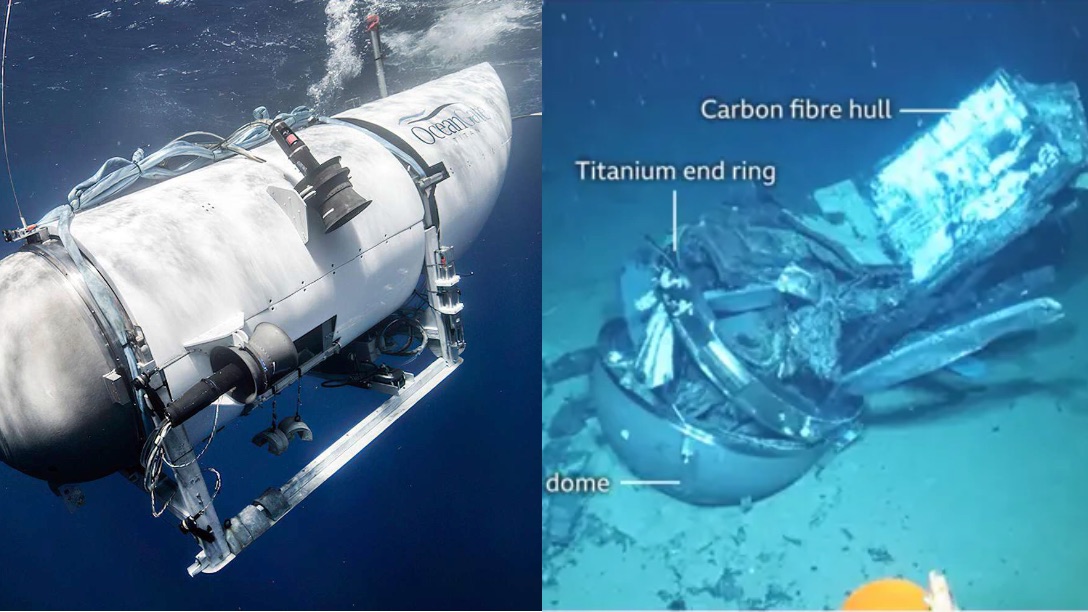
Much has been written about the engineering failures that led to the catastrophic loss of the Titan submersible in June 2023. The Marine Board of Investigation confirms what most already suspected: the carbon fibre hull was fatally flawed, OceanGate bypassed classification and certification, and basic safety protocols were ignored.
But dig deeper and you’ll find lessons that aren’t so obvious, and far more important for those of us working in high-risk environments.
Here’s what we really learned.
1. Regulatory gaps can be engineered just like submersibles
OceanGate didn’t just avoid regulation. It designed its operations around the grey zones between agencies. By positioning the sub as a “research vessel” in international waters and leveraging academic language, they avoided classification societies, flag states, and workplace safety oversight.
Lesson: When regulation is fragmented, organisations can exploit the seams. Novel technologies demand cross-agency coordination, not regulatory silos.
2. Safety by branding is more persuasive than safety by design
OceanGate sold innovation. Internally, they reinforced the myth that they were beyond the rules. Dissenting voices were marginalised or removed. Criticism was framed as disloyalty. The culture became insulated from feedback.
Lesson: A charismatic narrative can override engineering logic. When belief replaces evidence, failure becomes inevitable.
3. Technology without critical analysis is just theatre
The Real-Time Monitoring (RTM) system was positioned as a breakthrough. In reality, it lacked thresholds, escalation protocols, and data interpretation. It provided comfort, not assurance.
Lesson: Live data isn’t useful unless it leads to decisions. Without structure for sense-making, monitoring systems can create false confidence.
4. Risk management plans built on optimism will fail under pressure
There was no viable emergency response plan. No government was informed in advance. Rescue relied on military airlift and private goodwill. Every part of the recovery was reactive.
Lesson: A risk plan is only as strong as its worst-day scenario. If the plan assumes success, it isn’t a risk plan. It’s a marketing brochure.
5. No one owned risk in the way it needed to be owned
The CEO was designer, pilot, decision-maker, and chief spokesperson. There was no Director of Safety. No challenge function. No control over launch decisions independent of the person with the most to prove.
Lesson: Without clear and separate authority for go/no-go decisions, safety becomes a negotiation. Risk needs to be owned by someone with the power to say stop.
6. Whistleblowing without follow-through is meaningless
In 2018, a credible structural concern was raised by a whistleblower. OSHA didn’t investigate. The Coast Guard wasn’t notified. That missed opportunity cost lives.
Lesson: Whistleblower systems mean nothing without interagency communication and accountability. The process must work across jurisdictions or it doesn't work at all.
7. Protocols were performed, not practised
Risk assessments were written. “Stopskis” were held. Plans were drafted. But they were not linked to action. They served more as rituals than risk controls.
Lesson: Paperwork isn’t protection. If safety procedures are used to tick boxes rather than to shape decisions, they can become liabilities.
8. Language can obscure legal duty
Passengers were labelled “mission specialists” to frame them as participants, not tourists. This obscured OceanGate’s duty of care and sidestepped regulatory oversight.
Lesson: Terminology matters. Rebranding risk exposure doesn't reduce liability. It just delays accountability.
9. Weak signals were detected, but no one acted
A loud bang. A system anomaly. A tracking failure. Crew members felt a shudder on the support vessel. But none of these signs triggered escalation. They were noticed, then ignored.
Lesson: Most disasters aren’t sudden. The signals are there. The question is whether the system is willing to listen and act.
Final Thought
This wasn’t just an engineering failure. It was a failure of governance, culture, oversight, and design thinking.
The Titan incident is a textbook example of how risk becomes normalised, how controls get bypassed, and how organisations drift when no one is willing, or able, to say, “this isn’t safe.”
If you’re in a position of influence, especially in high-risk sectors, ask yourself:
- Are our controls real or ritual?
- Who can stop the mission, and will they be listened to?
- Are we operating within the gaps, or within the guardrails?
We don't need more paperwork. We need more accountability, more listening, and more systems built to fail safely.
References
- Paul Chivers, What We Really Learned from the Titan Implosion, LinkedIn, originally published 7 August 2025.
- United States Coast Guard, Titan Marine Board of Investigation report, accessed 10 August 2026.
- United States Coast Guard, release of the Titan investigation report, accessed 10 August 2026.